Resource allocation is hard to understand
Project managers know who is busy, but not always where effort is being consumed.

Give engineering teams one operating model for project work, resource assignments, skills, hours, pricing, risks and management visibility—without rebuilding the picture after the work is done.
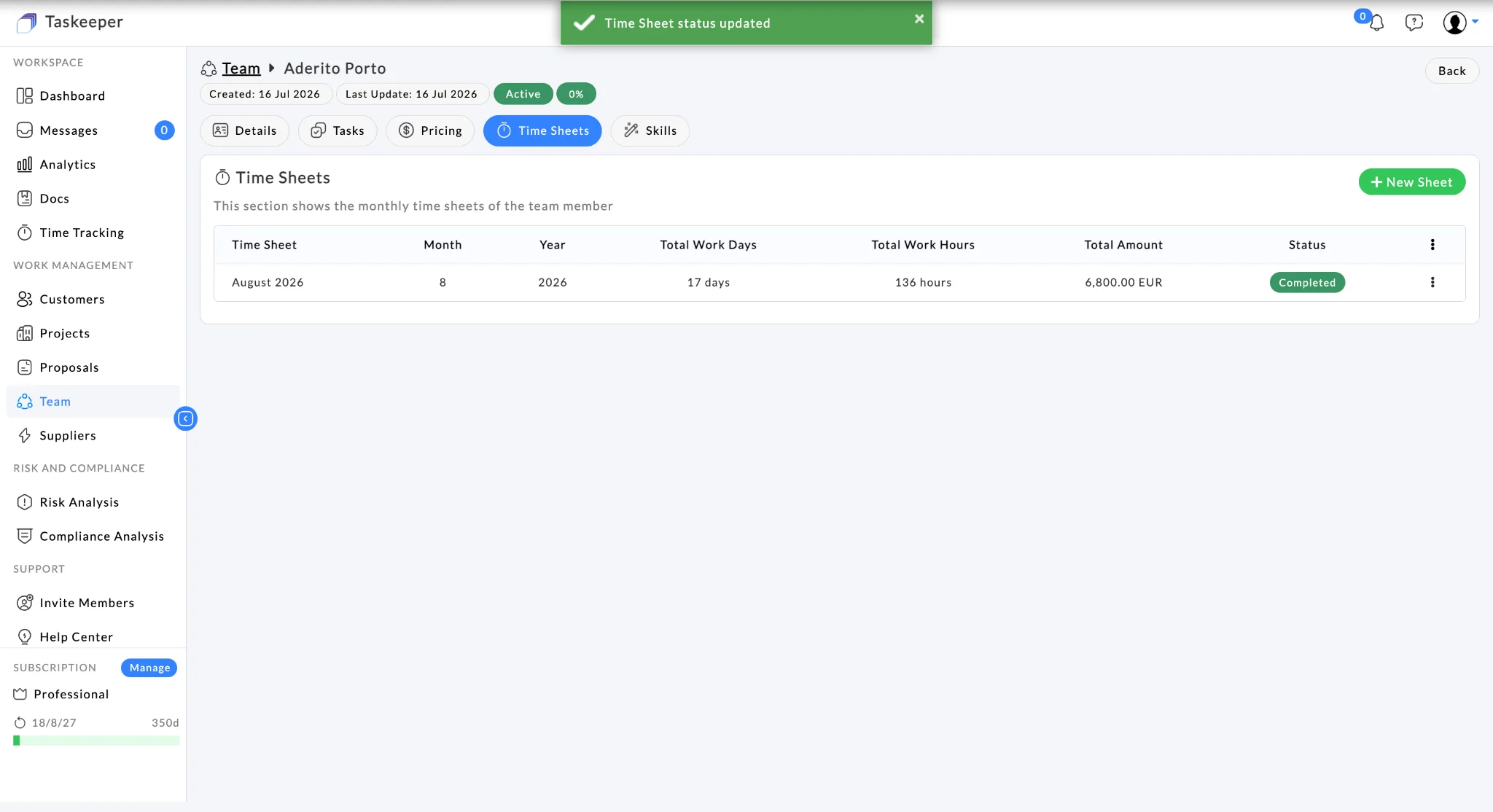
Project managers know who is busy, but not always where effort is being consumed.
Hours are captured later and lose the connection to task and project context.
Skills, seniority and pricing need to stay connected to the work being assigned.
Managers spend time joining data from separate project, people and reporting tools.
Resource records, monthly time sheets and project work can stay connected instead of being reconciled later.
Resource records, monthly time sheets and project work can stay connected instead of being reconciled later.
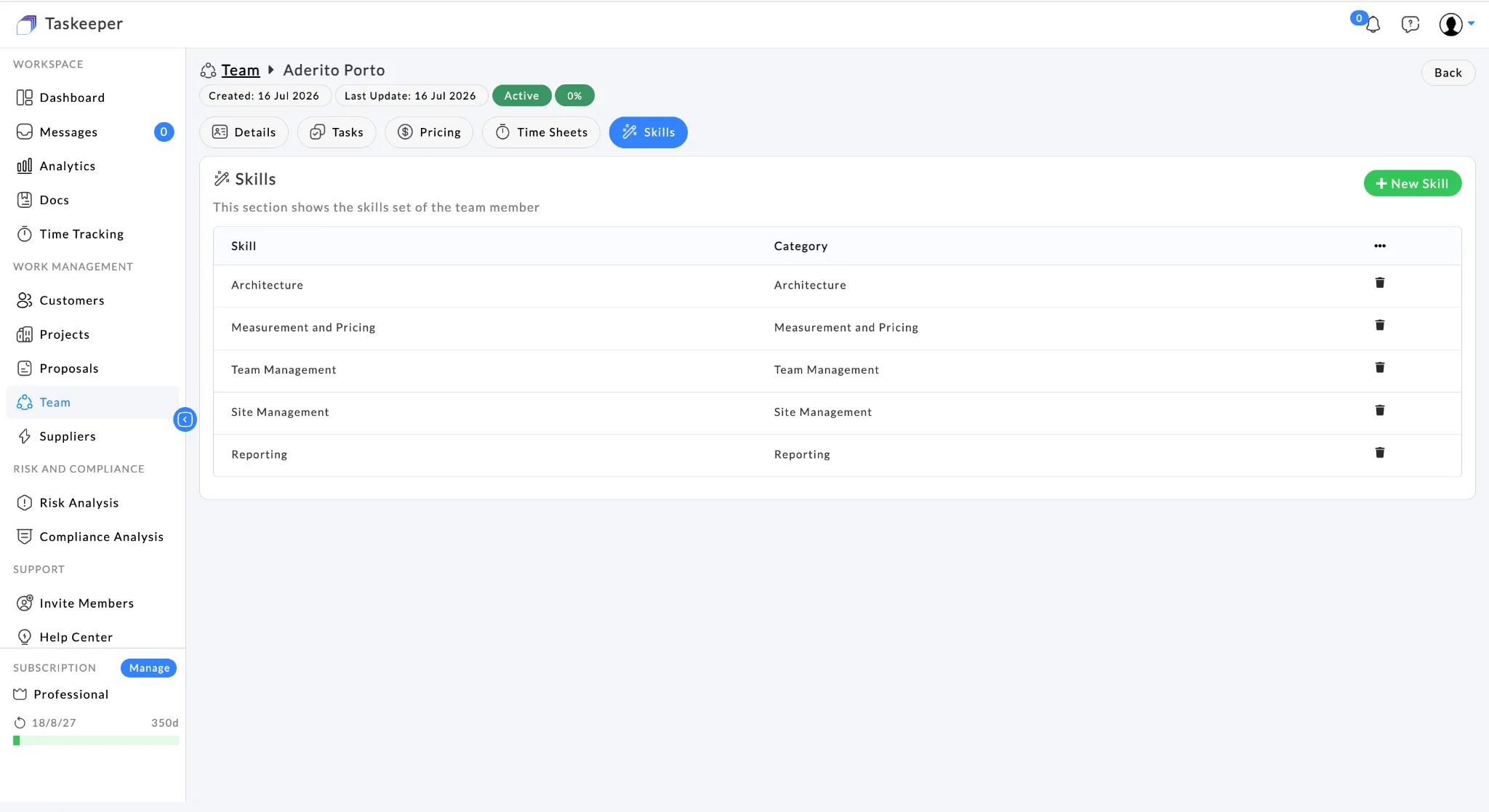
Skills can be maintained against the resource profile for better assignment context.
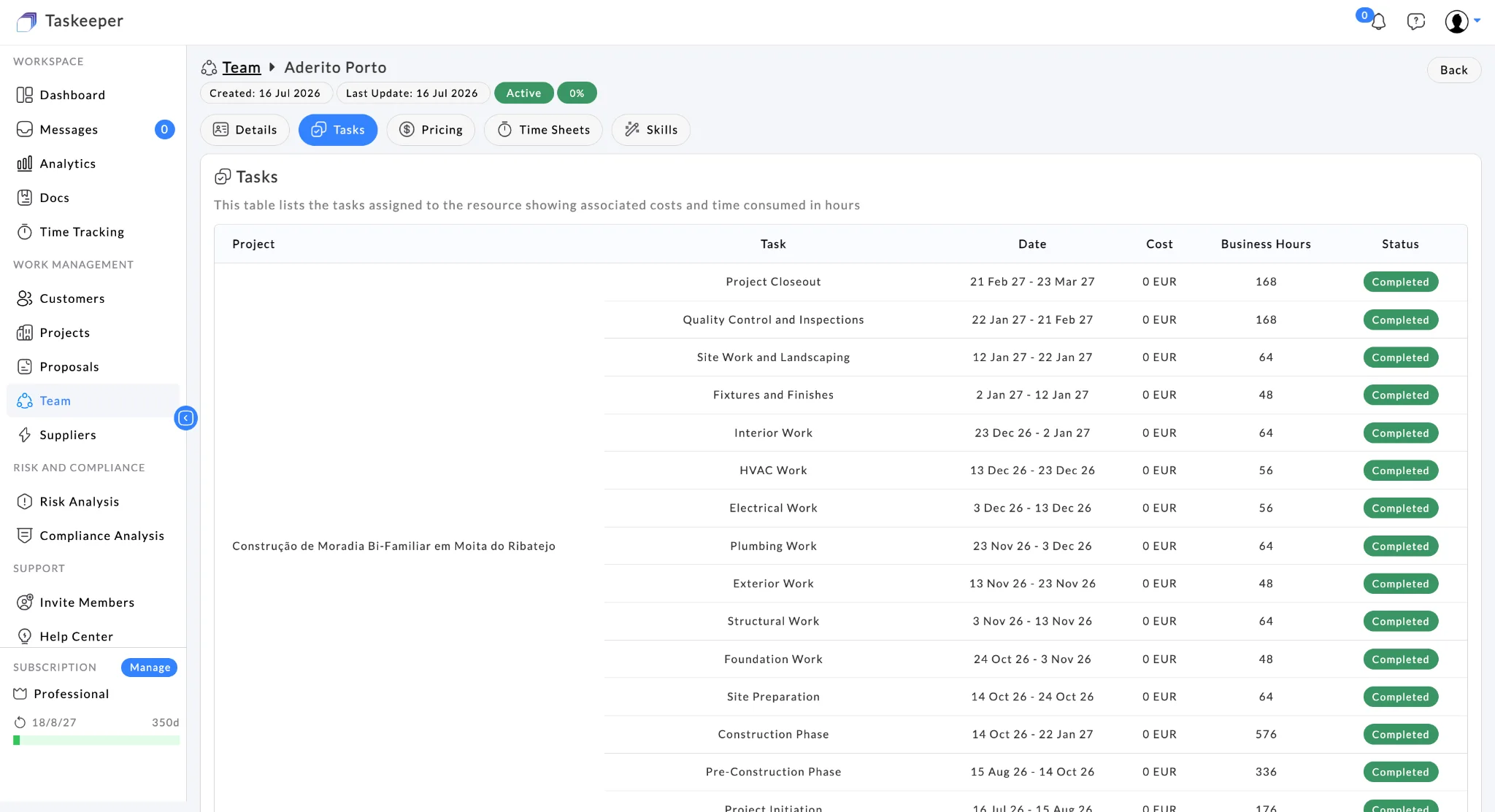
Pricing tiers support a stronger connection between effort and project economics.
A 45-person multidisciplinary engineering consultancy delivers twelve concurrent commissions. Directors need to understand resource effort, skills, pricing tiers, project status and delivery economics without maintaining separate resourcing and finance spreadsheets.
The problem is not a lack of software. It is that the operating picture is fragmented across too many places.
The same customer, project, people, commercial and governance context can support decisions from planning through delivery and closeout.
Taskeeper is designed so each capability becomes more useful when it shares customer, project, people and commercial context with the rest of the workflow.
Maintain scope, requirements, dates, project leadership and delivery context.
Connect people, business hours, tasks and project assignments.
Maintain resource skills and pricing tiers in the same profile.
Capture monthly or daily effort and calculated amounts.
Bring delivery risks and governance into project control.
Use project and commercial signals to support operational decisions.
Understand who is available, healthy, full or overloaded. Connect planned resource allocation with actual time worked so managers can rebalance work, review timesheets and understand labour
→Taskeeper can use project location to surface relevant legal, safety and regulatory requirements for supported markets, helping teams understand what is required, who owns it, what evidence
→Communicate with colleagues, project teams and authorised clients inside the same operational workspace where the work is managed — reducing the need to scatter project context across person
→Create a customer budget assessment quickly, keep every revision in Taskeeper, respond to feedback and — when the proposal is accepted — turn it directly into a live project instead of recre
→Taskeeper is designed to fit into an existing technology landscape rather than creating another data island. Standard onboarding can start with import/export templates, while ongoing integration can use APIs or CSV-based exchange.
Download the Taskeeper Excel import/export template, populate it with your existing customer, project, resource or other supported data, then import it back into Taskeeper.
Use Taskeeper APIs for system-to-system integration, or consume and produce CSV files where a lightweight data exchange is sufficient. This supports gradual adoption without forcing every surrounding system to change at once.
Role-based permissions, MFA, SSO/SAML, encryption in transit and at rest, audit logging, backups and disaster recovery, security monitoring, vulnerability management, incident response, API security, least-privilege access, data retention/export/deletion controls, GDPR/DPA support and multi-company segregation are part of the launch security model.
Yes. Resource profiles, task assignments and time sheets can be used together so project teams can review effort in project context.
Yes. Resource profiles include skills and pricing tiers, helping teams keep assignment and commercial context together.
Yes. Risks can be tracked with impact, likelihood, ownership, mitigation, status and escalation information.
Yes. A resource-and-time workflow can be a practical starting point before connecting more project, commercial and governance controls.
Bring one real workflow to a demo and map it to the Taskeeper capabilities that can create value first.